With the gradual rollout of smart meters and dynamic pricing policies, mastering electricity consumption becomes a true financial challenge for households.
For those still benefiting from the night tariff in Wallonia, there is currently an even more interesting savings opportunity, especially for setups deployed before January 2024.
This is exactly where the sophisticated Belup battery comes in: it combines solar storage, strategic electricity purchasing, and automated dispatch control to substantially reduce your overall energy cost.
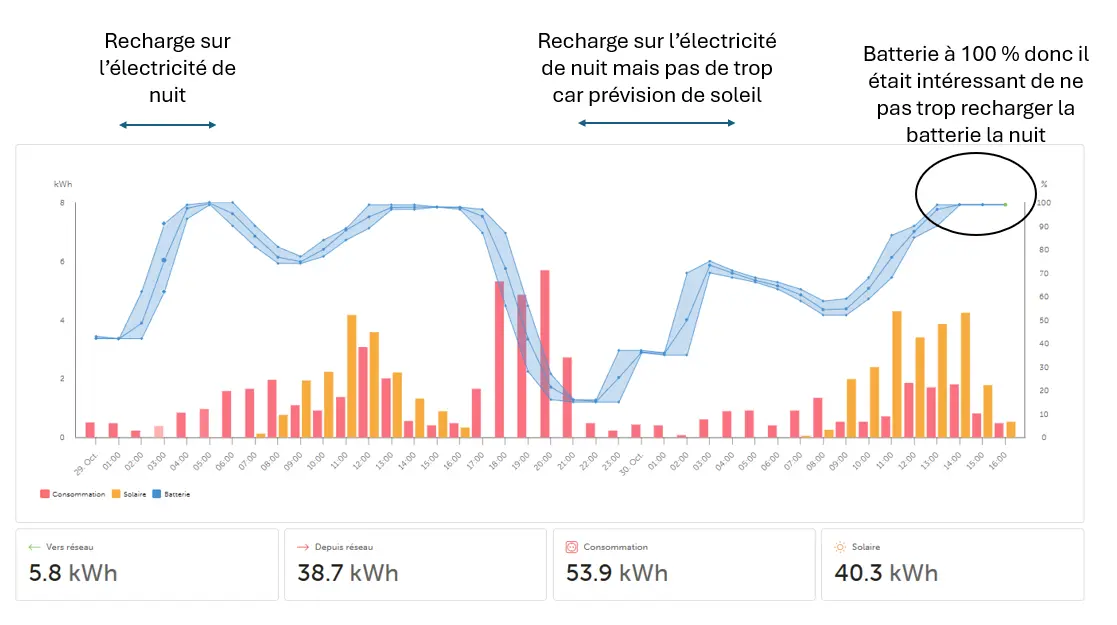
Double optimization cycle: the key to profit
Most batteries perform just one charge-discharge cycle per day. Belup actually yields up to two cycles a day through built-in intelligence:
-
✅
1️⃣ Solar cycle during the day
→ Recharge via photovoltaic panels
→ Restore power in the evening and early part of the night -
✅
2️⃣ Tariff cycle during the night
→ Recharge via the cheaper night tariff
→ Return power during daytime when current electricity costs rise
Result: less power purchased at premium rates, maximum auto-consumption levels, and savings on every kWh.
Cheap electricity on weekends too
Electricity prices tend to run cheaper on weekends. The Belup algorithm automatically accounts for this:
- ⚡ It boosts weekend electrical storage
- 🎯 It maximizes power routing for periods mapping to higher costs
In this way, you tap the premium pricing strategy perfectly, without any effort from your side.
An optimal solution for 2024-pre residential structures
Households housing solar systems prior to January 2024 maintain a specialized regulatory scope wherein:
- The night tariff stands as remarkably advantageous
- Storage achieves maximum yield on every produced kWh
- The battery provides seamless transition potential towards impending dynamic rates
➡️ The Belup framework backs sustained profitability for your solar install, irrespective of market leaps.
Indicative savings baseline
365 (days) X 0.7 (avg battery span) X 9.6 (battery kWh) X 0.04 € / kWh (variance against peak/off-peak modes): ~ 98 € / year.
We recommend enrolling under an electric tier granting the maximum interval separating standard versus low span thresholds.
À lire aussi
Guide autoconsommation solaire
PrixPrix batterie solaire 2026
ROIEst-ce rentable ? Analyse
ComparatifComparatif batteries 2026
Pages piliers : Guide complet — Prix — Rentabilite